
Top 3 Expert-Recommended Workouts and Diets for Men to Shed Pounds
By Dr. Patrick Mumo, Certified Nutrition Specialist
Losing weight is hard. Keeping it off is even harder.
If you’re a 35-year-old man struggling with weight loss, you’re not alone. According to the Centers for Disease Control and Prevention, nearly 74% of American men are overweight or obese.
The good news? Science has identified specific exercises and dietary strategies that work for long-term weight loss. This guide breaks down exactly what you need to do.
Why Most Weight Loss Plans Fail
Most diets fail because they’re too restrictive. People lose weight quickly, then gain it all back—plus more.
This phenomenon is called “yo-yo dieting.” It damages your metabolism and makes future weight loss harder.
The solution is building sustainable habits. Not following extreme restrictions you can’t maintain.
The 3 Best Exercises for Permanent Weight Loss
1: Strength Training (The Metabolism Booster)
Strength training is the foundation of any effective weight loss program. It builds lean muscle mass, which burns calories 24/7.
Why It Works for Men Over 35
After age 30, men lose 3-5% of muscle mass per decade. This muscle loss slows your metabolism significantly.
Strength training reverses this process. Each pound of muscle burns approximately 6 calories per day at rest, according to research from National Institute of Health.
That might not sound like much. But add 10 pounds of muscle, and you’re burning an extra 60 calories daily—without doing anything.
How to Implement Strength Training
Start with compound movements. These exercises work multiple muscle groups simultaneously.
The big five compound exercises are:
- Squats
- Deadlifts
- Bench press
- Rows
- Overhead press
Train 3 times per week. Allow at least one rest day between sessions for muscle recovery.
Begin with weights you can lift for 8-12 repetitions. When you can complete 12 reps easily, increase the weight by 5-10%.
Medical Evidence
A study published in the Journal of Applied Physiology found that strength training increased resting metabolic rate by 7% in participants. That’s an extra 100-150 calories burned daily.
The National Institutes of Health confirms that resistance training is essential for maintaining muscle mass during weight loss.
2: High-Intensity Interval Training (The Fat Burner)
HIIT alternates between intense exercise bursts and recovery periods. It’s incredibly effective for burning fat in minimal time.
Why HIIT Works
HIIT creates an “afterburn effect” called Excess Post-Exercise Oxygen Consumption (EPOC). Your body continues burning calories for hours after your workout ends.
Research shows HIIT burns 25-30% more calories than other forms of exercise. It’s particularly effective at reducing visceral fat—the dangerous fat around your organs.
How to Do HIIT Correctly
Keep sessions short. 20-30 minutes is sufficient for maximum benefit.
A simple HIIT protocol:
- 30 seconds maximum effort
- 90 seconds active recovery
- Repeat 8-10 times
You can apply this to any exercise. Running, cycling, rowing, or bodyweight exercises all work.
Limit HIIT to 2-3 sessions weekly. More isn’t better—your body needs recovery time.
Safety Considerations
As a medical professional, I must emphasize proper warm-up. Spend 5-10 minutes preparing your body before intense exercise.
If you have heart conditions or joint problems, consult your physician before starting HIIT. The intensity can be adjusted to your fitness level.
3: Daily Walking (The Consistency Champion)
Walking doesn’t seem exciting. But it’s perhaps the most important exercise for sustainable weight loss.
The Science of Walking
Walking is low-impact and sustainable long-term. Unlike intense workouts that leave you exhausted, walking energizes you.
Studies show that 10,000 steps daily helps maintain weight loss. But even 7,000-8,000 steps provide significant benefits.
Walking after meals is particularly effective. It helps regulate blood sugar and improves insulin sensitivity.
Making Walking a Habit
Track your steps with a smartphone or fitness tracker. Aim for incremental increases each week.
Break it into manageable chunks:
- 10-minute walk after breakfast
- 20-minute lunchtime walk
- 15-minute evening walk
Take walking meetings. Park farther from entrances. Use stairs instead of elevators.
These small changes compound dramatically over time.
The 3 Best Dietary Choices for Weight Loss
1: Prioritize Protein at Every Meal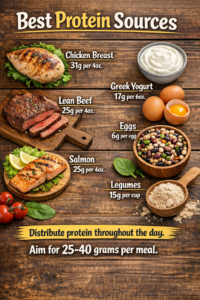
Protein is your secret weapon for weight loss. It keeps you full, preserves muscle, and burns more calories during digestion.
How Much Protein You Need
For weight loss, aim for 0.7-1 gram of protein per pound of body weight. A 200-pound man needs 140-200 grams daily.
This might seem high. But it’s supported by extensive research from Healthline and other leading institutions.
Why Protein Works
Protein has the highest thermic effect of all macronutrients. Your body burns 20-30% of protein calories just digesting it.
Compare this to carbohydrates (5-10%) and fats (0-3%). Protein literally burns more calories as you eat it.
Protein also increases satiety hormones. You feel fuller longer and experience fewer cravings.
Best Protein Sources
- Chicken breast (31g per 4oz)
- Lean beef (25g per 4oz)
- Salmon (25g per 4oz)
- Greek yogurt (17g per 6oz)
- Eggs (6g per egg)
- Legumes (15g per cup)
Distribute protein throughout the day. Aim for 25-40 grams per meal.
2: Eliminate Ultra-Processed Foods
Ultra-processed foods are engineered to be addictive. They’re high in calories but low in nutrients and satisfaction.
What Are Ultra-Processed Foods?
These are foods with ingredients you wouldn’t find in a home kitchen. Think artificial flavors, preservatives, and modified starches.
Examples include:
- Packaged snacks and chips
- Sugary cereals
- Frozen meals
- Sodas and sweetened beverages
- Fast food
- Most packaged baked goods
The Health Impact
Research published by the National Library of Medicine links ultra-processed foods to obesity, diabetes, and heart disease. These foods override your natural hunger signals.
They’re designed for “bliss point”—the perfect combination of sugar, salt, and fat that makes you crave more. Your brain can’t regulate intake properly.
The Whole Food Alternative
Focus on single-ingredient foods. Foods that look like they came from nature.
Fill your plate with:
- Vegetables (unlimited)
- Fruits (2-3 servings daily)
- Whole grains (brown rice, quinoa, oats)
- Lean proteins
- Healthy fats (avocado, nuts, olive oil)
These foods provide nutrients and fiber. They fill you up without excessive calories.
3: Practice Consistent Meal Timing
When you eat matters almost as much as what you eat. Consistent meal timing regulates hunger hormones and metabolism.
The Science of Meal Timing
Your body thrives on routine. Eating at similar times daily optimizes hormones like ghrelin (hunger) and leptin (fullness).
Skipping meals leads to extreme hunger. This triggers overeating and poor food choices.
Creating Your Eating Schedule
Establish 3 main meals at consistent times. Add 1-2 small snacks if needed.
A sample schedule:
- Breakfast: 7:00 AM
- Lunch: 12:00 PM
- Snack: 3:00 PM
- Dinner: 6:30 PM
Stop eating 2-3 hours before bed. Late-night eating interferes with sleep and fat burning.
The Overnight Fasting Window
Aim for 12-14 hours between dinner and breakfast. This natural fasting period allows your body to burn stored fat.
You don’t need extreme intermittent fasting. Simply stop eating after dinner and have breakfast at a reasonable time.
Putting It All Together: Your Action Plan
Success comes from consistency, not perfection. Start with one change at a time.
Week 1-2: Exercise Foundation Start strength training twice weekly. Add 2,000 extra steps to your daily routine.
Week 3-4: Add Intensity Introduce one HIIT session weekly. Increase daily steps to 7,000-8,000.
Week 5-6: Dietary Changes Increase protein to target levels. Eliminate one category of processed foods.
Week 7-8: Meal Timing Establish consistent meal times. Create your 12-14 hour overnight fasting window.
Week 9 and Beyond: Maintain and Adjust Continue all habits. Adjust based on results and how you feel.
The Bottom Line
Sustainable weight loss requires both exercise and dietary changes. Strength training builds metabolism-boosting muscle. HIIT burns maximum fat in minimal time. Daily walking ensures consistency.
On the nutrition side, prioritize protein at every meal. Eliminate ultra-processed foods that sabotage your efforts. Practice consistent meal timing to regulate hunger hormones.
These aren’t quick fixes. They’re lifestyle changes that produce lasting results.
The science is clear. The methods work. Now it’s time to take action.
About the Author
Dr. Patrick Mumo is a board-certified physician specializing in nutrition and preventive medicine with over 15 years of clinical experience helping patients achieve sustainable weight loss.
Disclaimer: This information is for educational purposes only and should not replace professional medical advice. Consult your healthcare provider before starting any new exercise or nutrition program.